
Four participatory workshops for the City of Zürich, run as part of the After The Algorithm festival. Citizens, city experts, and an AI prompter worked together to find the visual language for communicating Zürich's planned city-centre redesign.
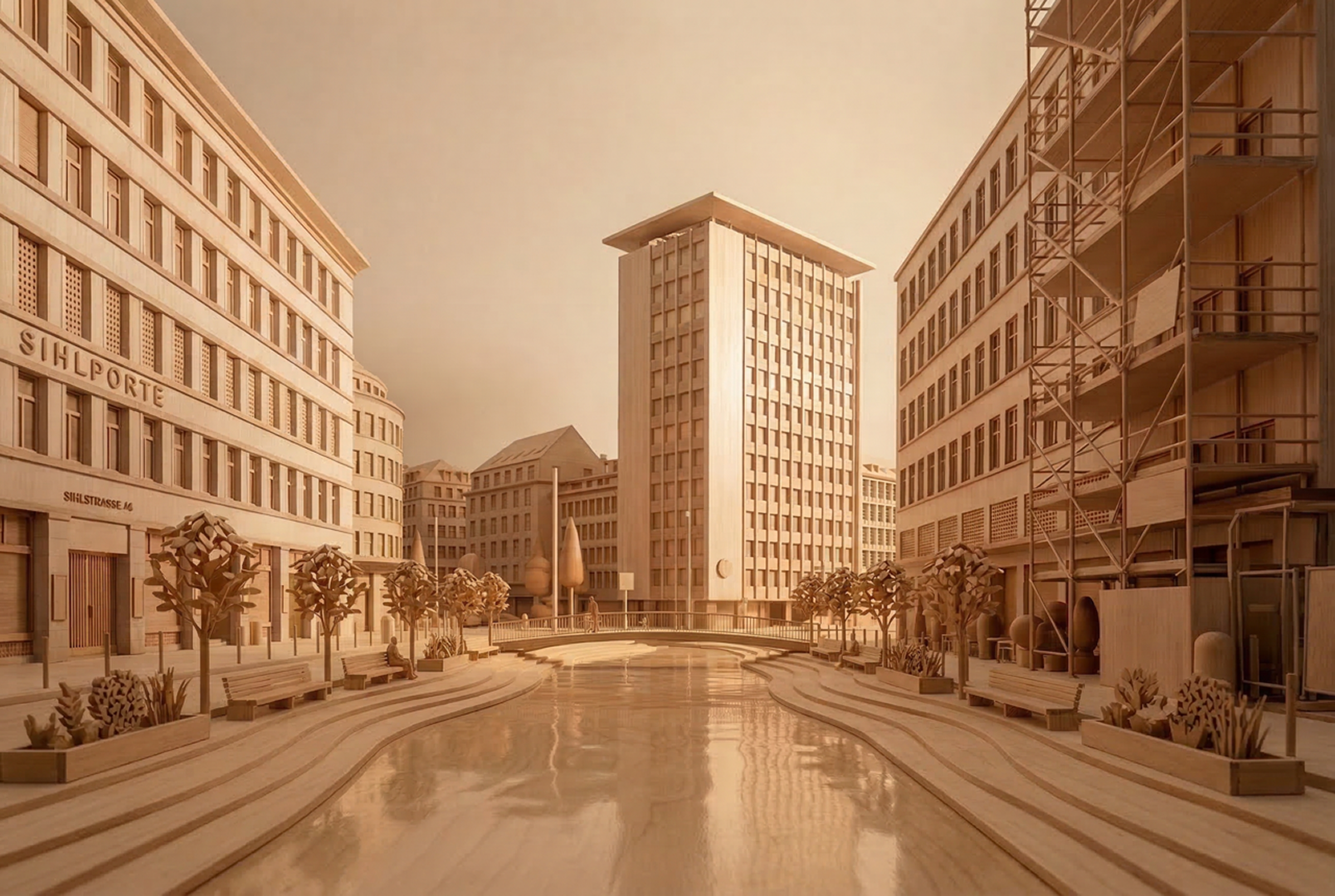
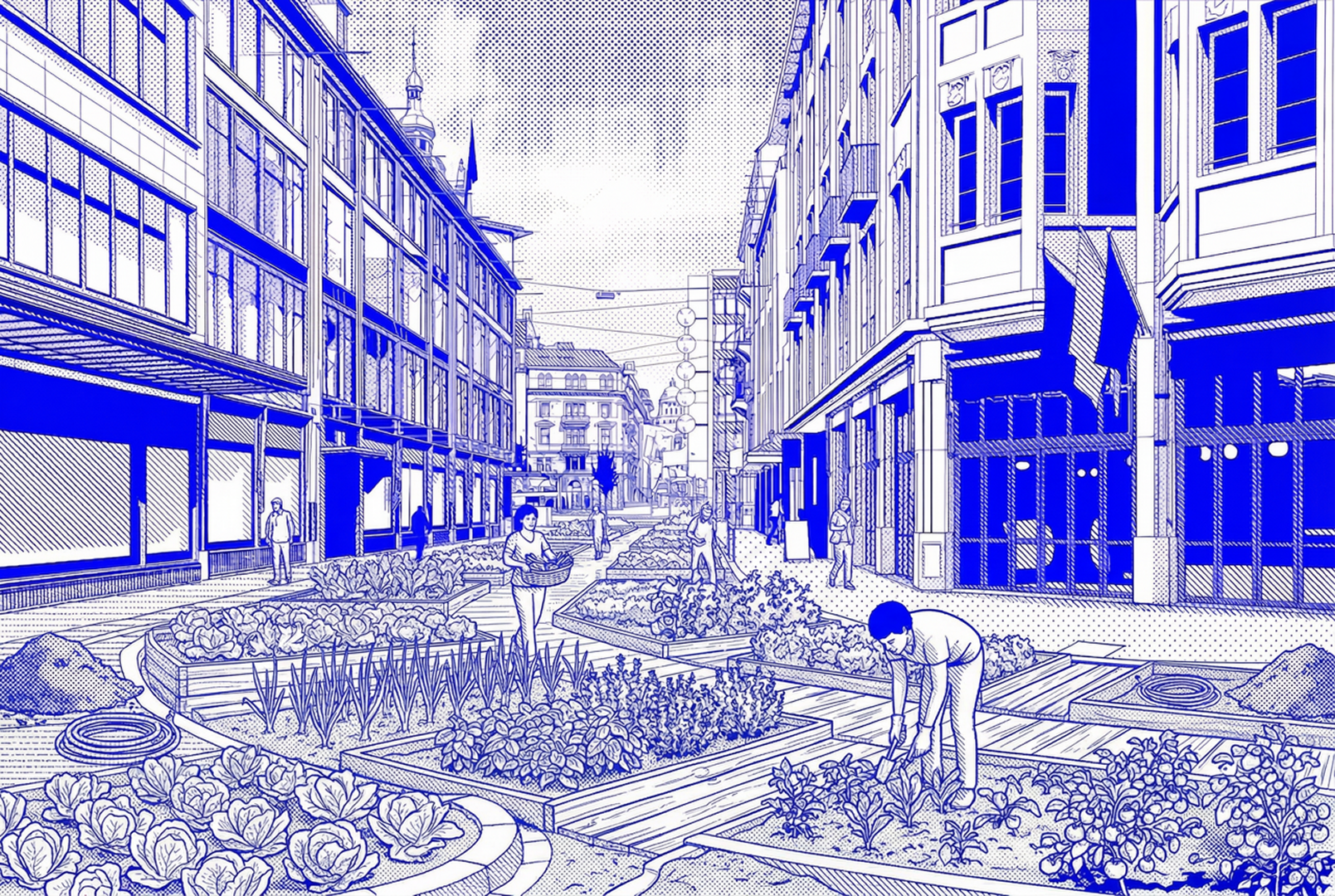
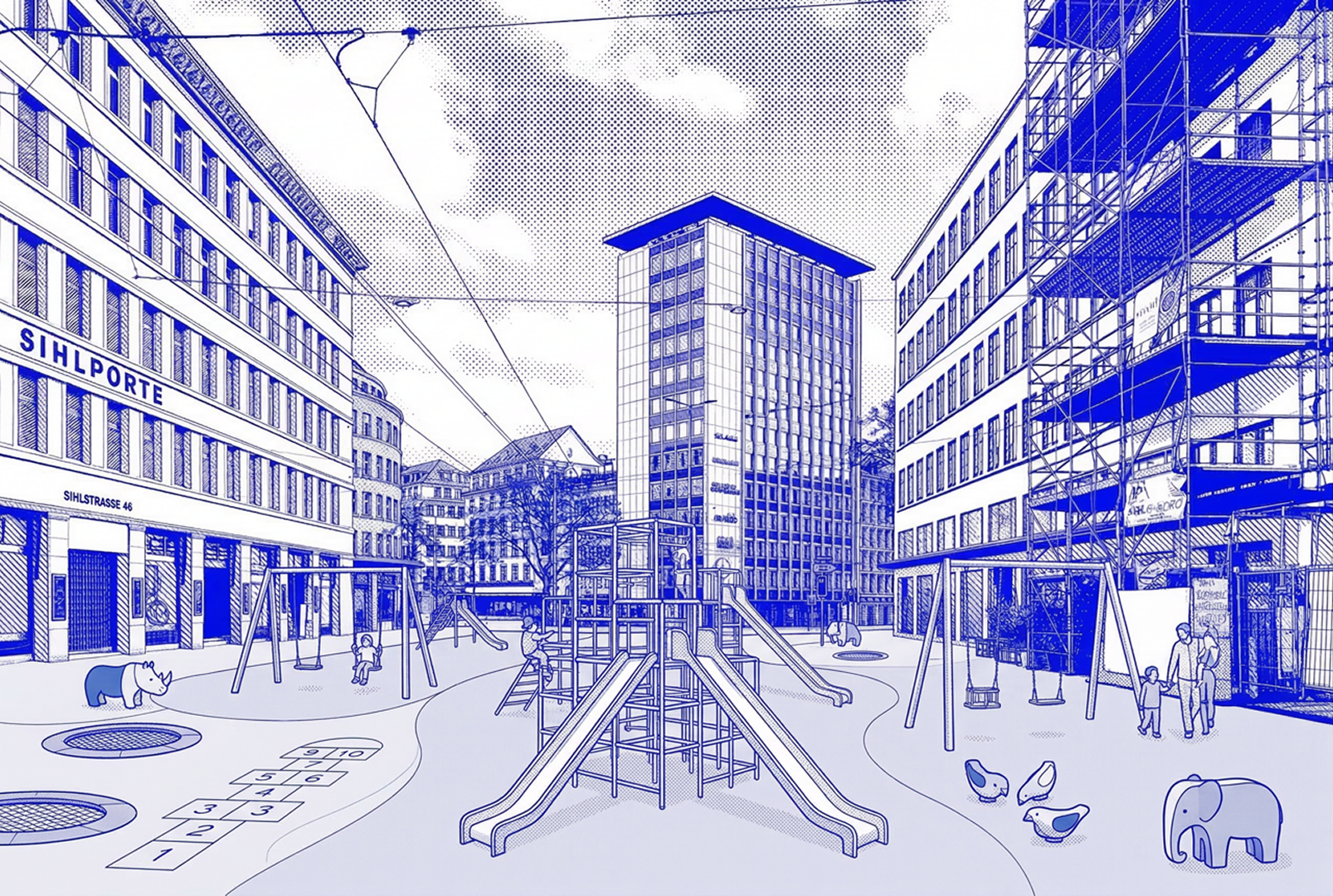
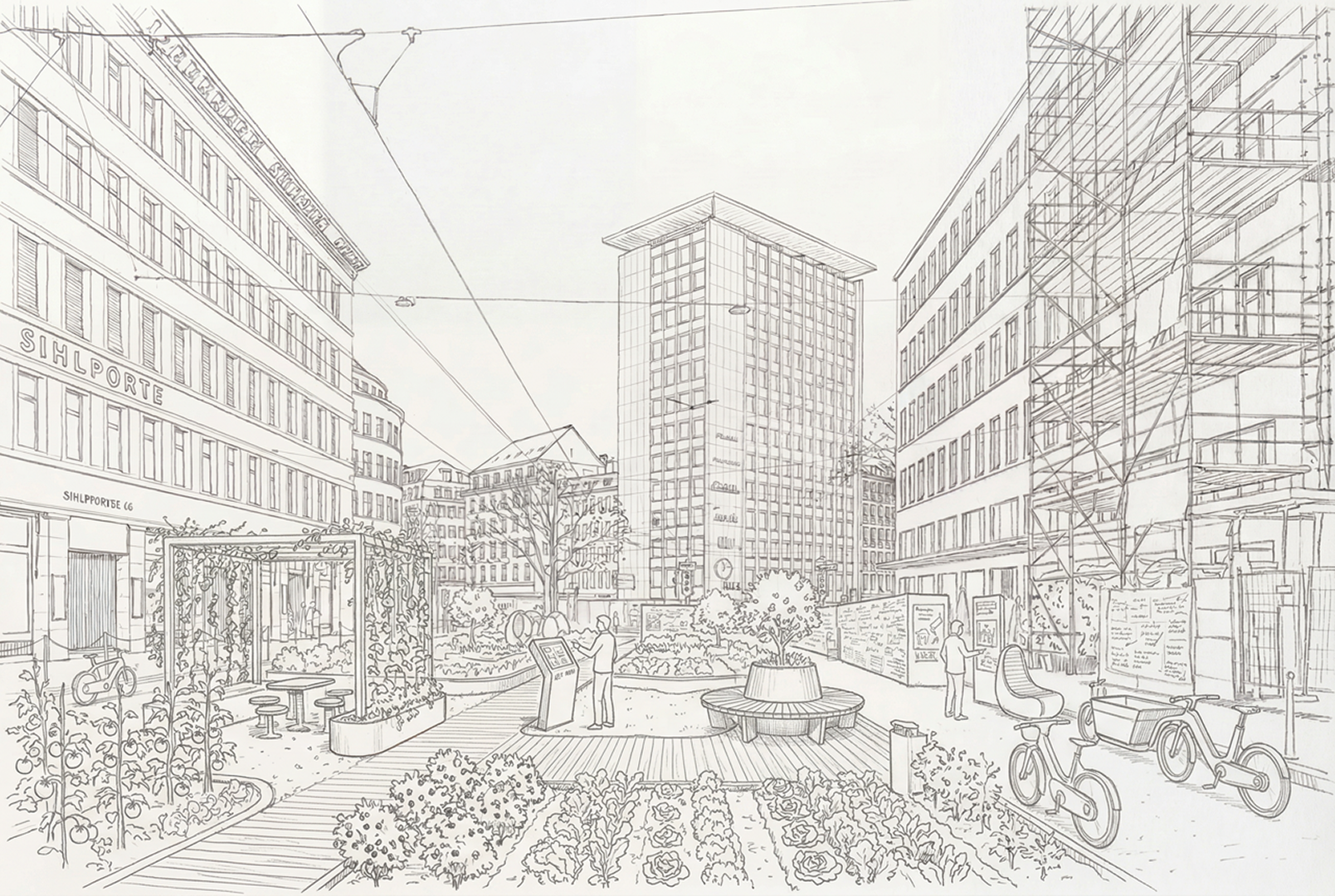
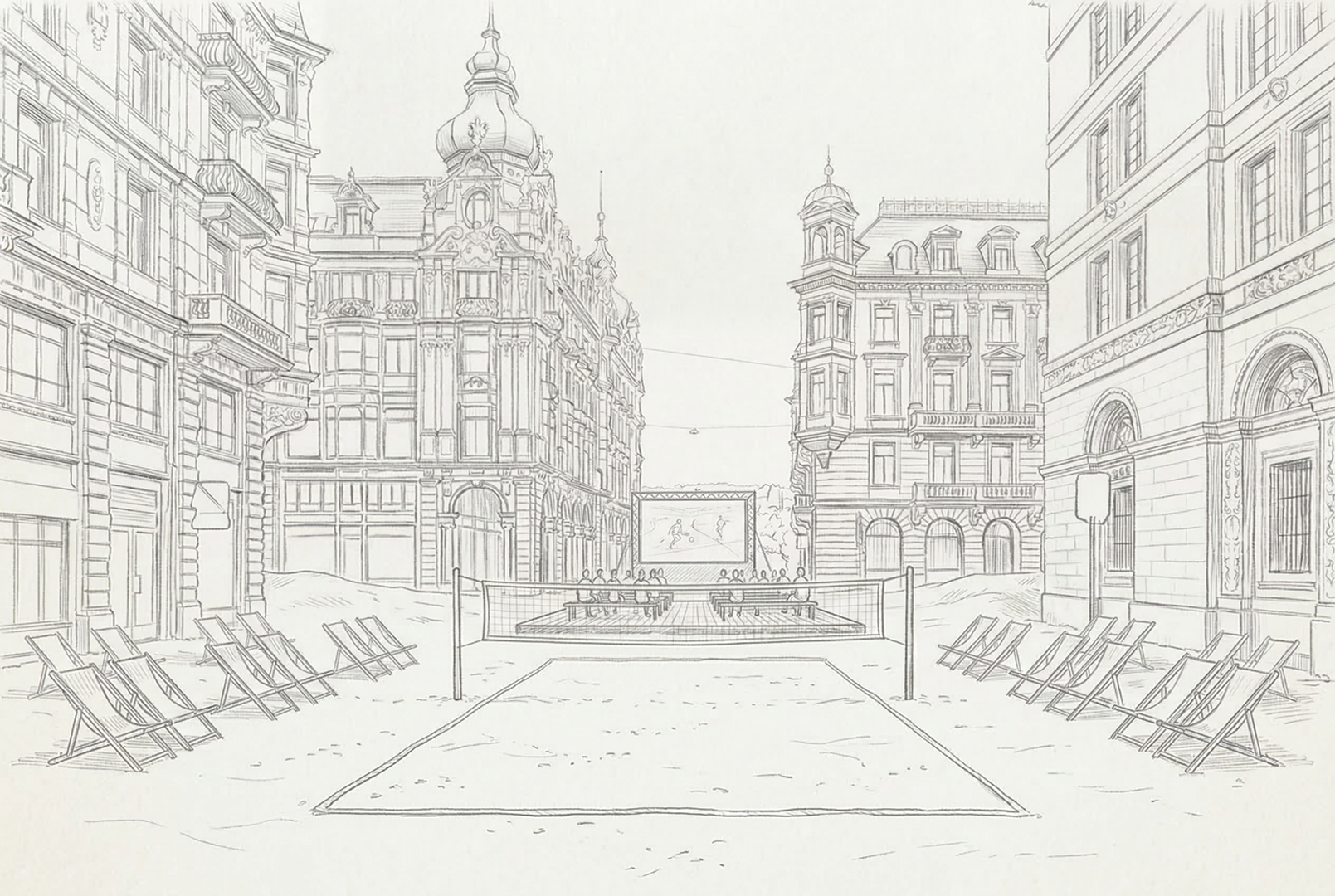
The City of Zürich is planning a redesign of its city-centre public spaces: streets, pavements, squares, made fit for the next generation of urban life. Before construction starts, the city has to bring its citizens into the conversation. That means imagery. And the choice of imagery shapes what people think is possible.
The workshops, “Die City von morgen”, ran across two sessions at the After The Algorithm festival in March 2026. Hosted by Smart City Zürich, Tiefbauamt, OIZ, and Soziale Dienste, they brought citizens into the same room as city experts to test a specific question: which visual language works when a city has to communicate a future it hasn't built yet.
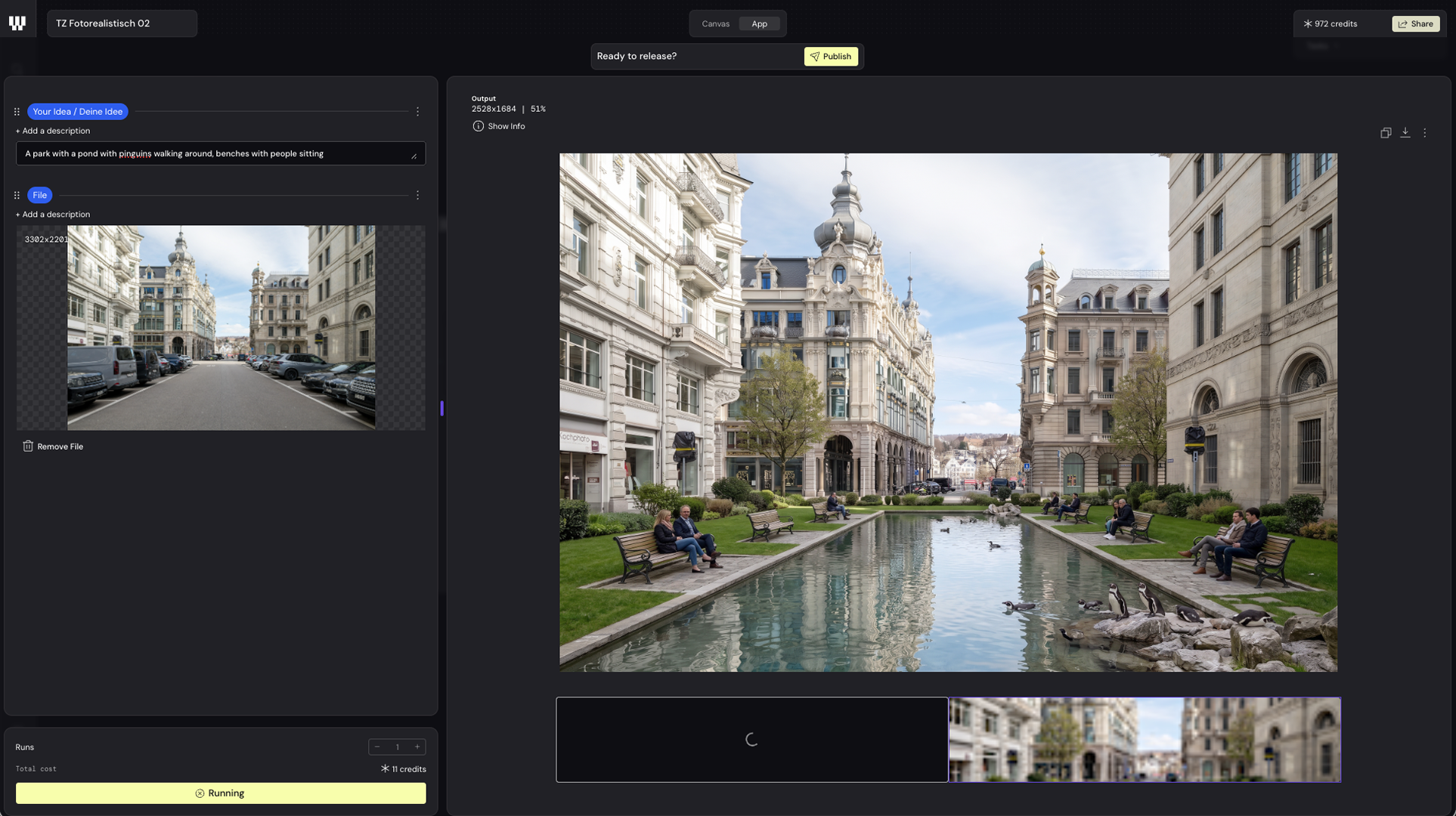
The workshop workflow had to fit that reality: simple enough for first-time users, fast enough to produce real images in the session, and grounded enough that what came out could actually inform planning communications.
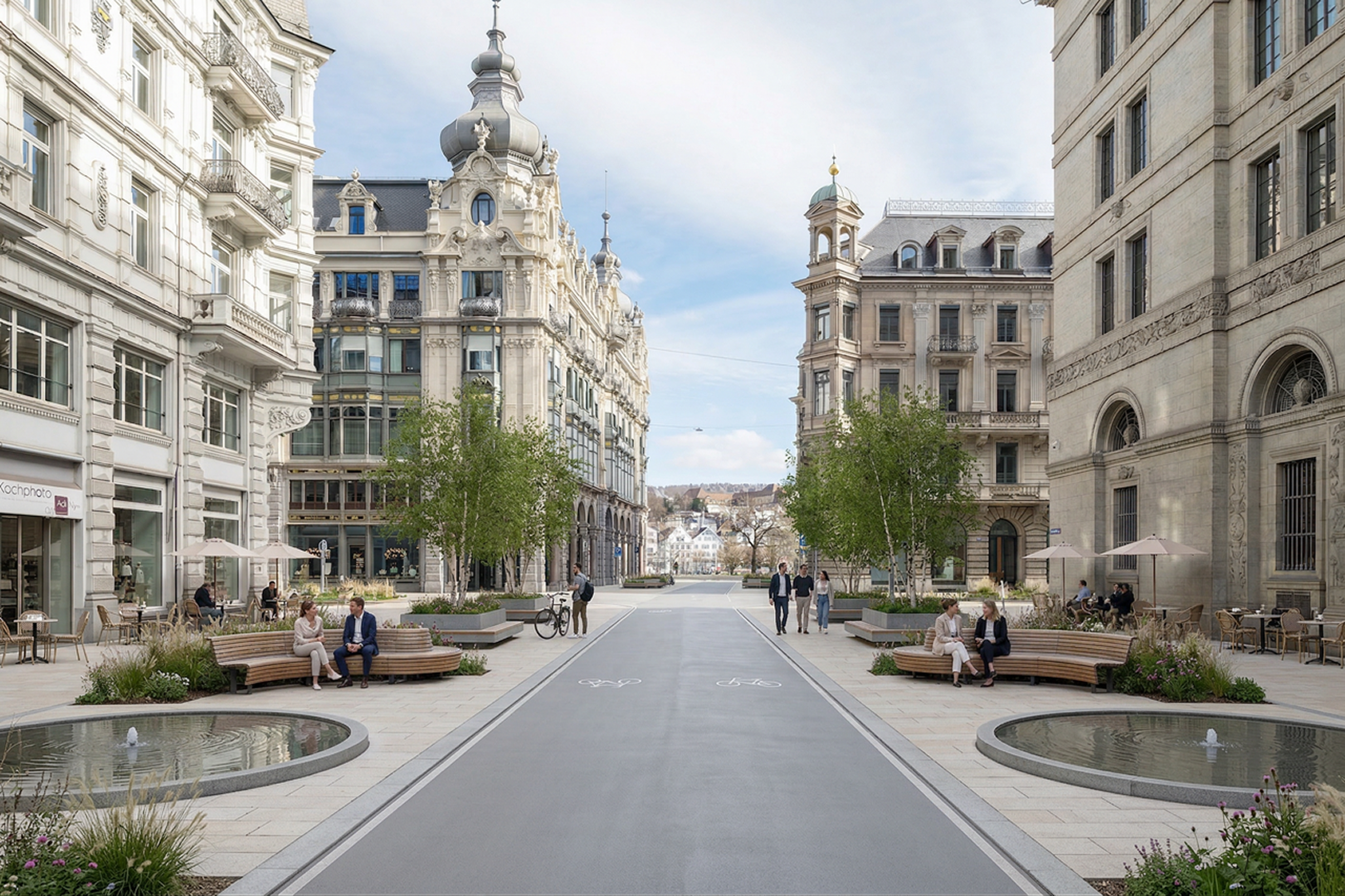
It's also the worst tool for public participation. Photoreal looks like a final decision, not an open question. Citizens read it as “this is what's coming”, not “what do you think?”. The workshops had to find a middle: imagery concrete enough to feel real, open enough to invite input.
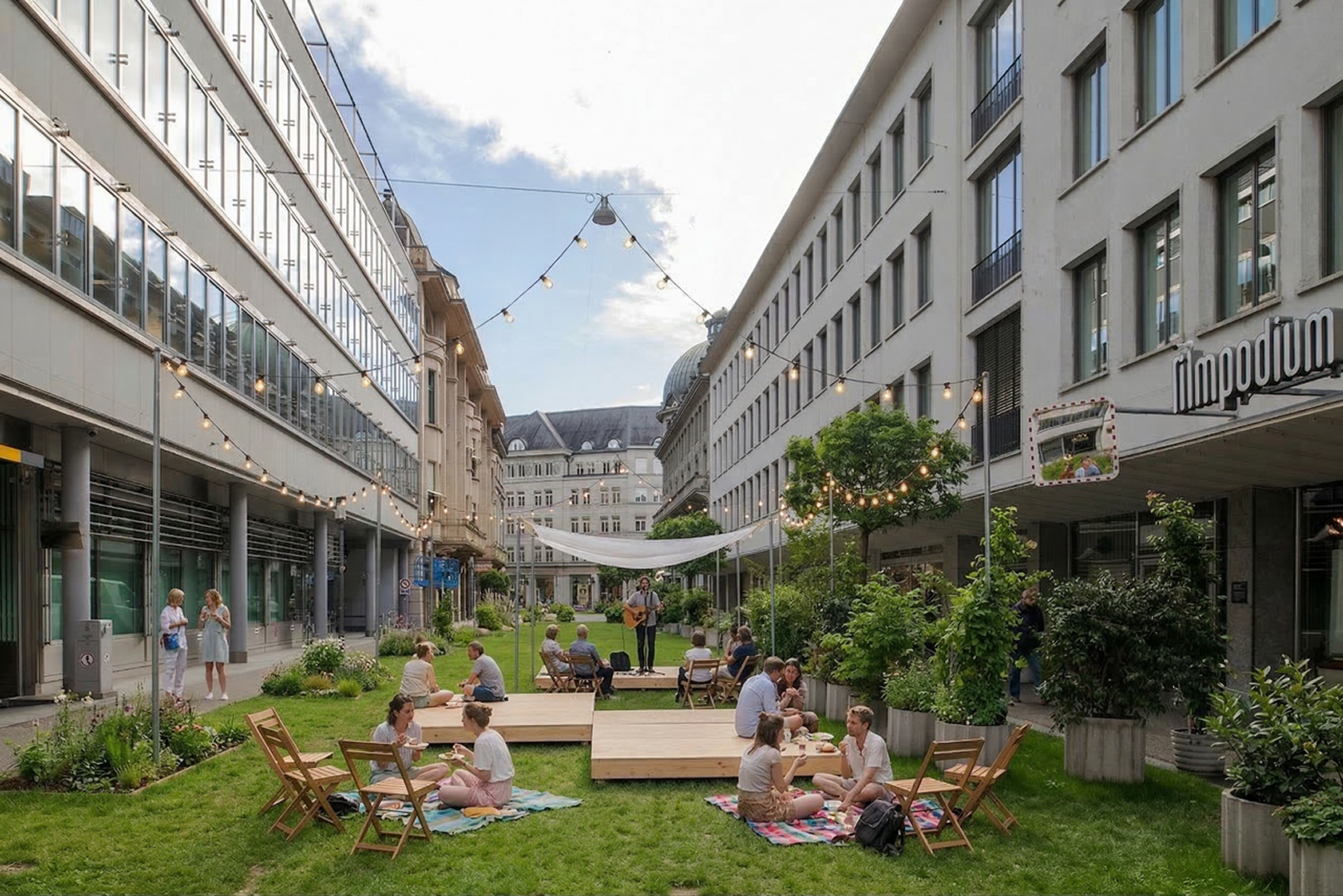
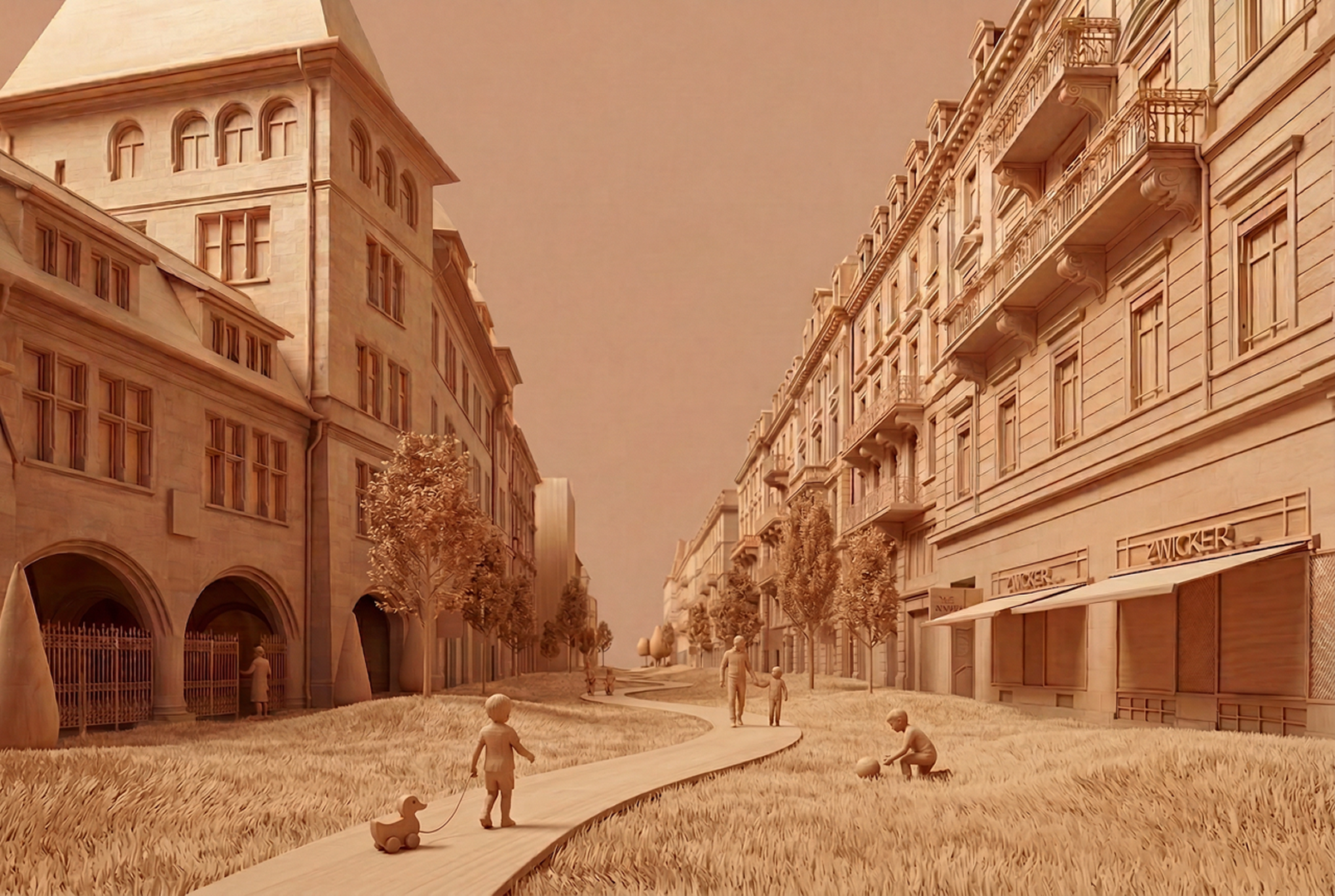
Four AI-generated visual styles, set up as four stations: a sketch direction, a blue graphic direction, a wooden sculpture direction, and a photorealistic direction. Citizens and city experts moved between them, weighed in, compared. The workshop was a structured test, not an open exploration.
The workshops produced a clear finding from a structured test: for public participation, graphic illustration works better than photoreal rendering. The four directions presented (sketch, blue graphic, wooden sculpture, photorealistic) drew very different responses. Photoreal had the most immediate wow effect, but it reads as predetermined. Citizens see a finished design and respond to it, not with it. The illustrative directions left room. The project feels concrete without committing to exactly what it will be.
Stadt Zürich now has a tested shortlist of styles to apply when communicating its city-centre redesign, a workflow that fits how its teams actually work, and a clearer answer to a question most planning offices are still asking.
For people in motion, ready to test, willing to discard.
Tell me what you're working on →